MELAKA, 06 Oct – A breast lump does not have to be painful to warrant medical attention, and women should not assume it is harmless simply because it feels mobile or changes with the menstrual cycle.

Consultant General Surgeon Dr Ong Kheng Wah of Oriental Melaka Straits Medical Centre said while breast lumps were common and often benign, a new or unusual one should be assessed, particularly if it persisted or was associated with other changes.
Common causes include fibroadenomas, cysts, hormonal or fibrocystic changes, inflammation, infection and fat necrosis. Fibroadenomas are particularly common among younger women, while cysts and fibrocystic changes can be associated with hormonal fluctuations.
Benign lumps could feel smooth or mobile and change with the cycle, while cancerous growths could be harder, irregular or fixed. Dr Ong said these features were not reliable for diagnosis, as some cancers could feel mobile and some benign lumps firm.
A persistent, enlarged or changing swelling should be assessed. Warning signs include persistent thickening, skin dimpling or an orange peel appearance, eczema-like nipple changes, blood-stained discharge, an ulcer, an armpit lump or a newly inverted nipple.
“Breast cancer does not always cause pain, so a painless lump should not be ignored,” he said.
Breast cancer remains the most common cancer among Malaysian women, according to the Malaysia National Cancer Registry Report 2017 to 2021. Its age-standardised incidence rate rose from 34.1 per 100,000 women in 2012 to 2016 to 38.9 in 2017 to 2021, while lifetime risk before age 75 was about one in 23.
Incidence increased substantially from around age 40, with the highest incidence seen among women aged 65 to 69. A 2020 Malaysian study found 13.6 per cent of patients in its study population were aged 40 or below.
Dr Ong said age was an important risk factor, but younger women were not protected from the disease.
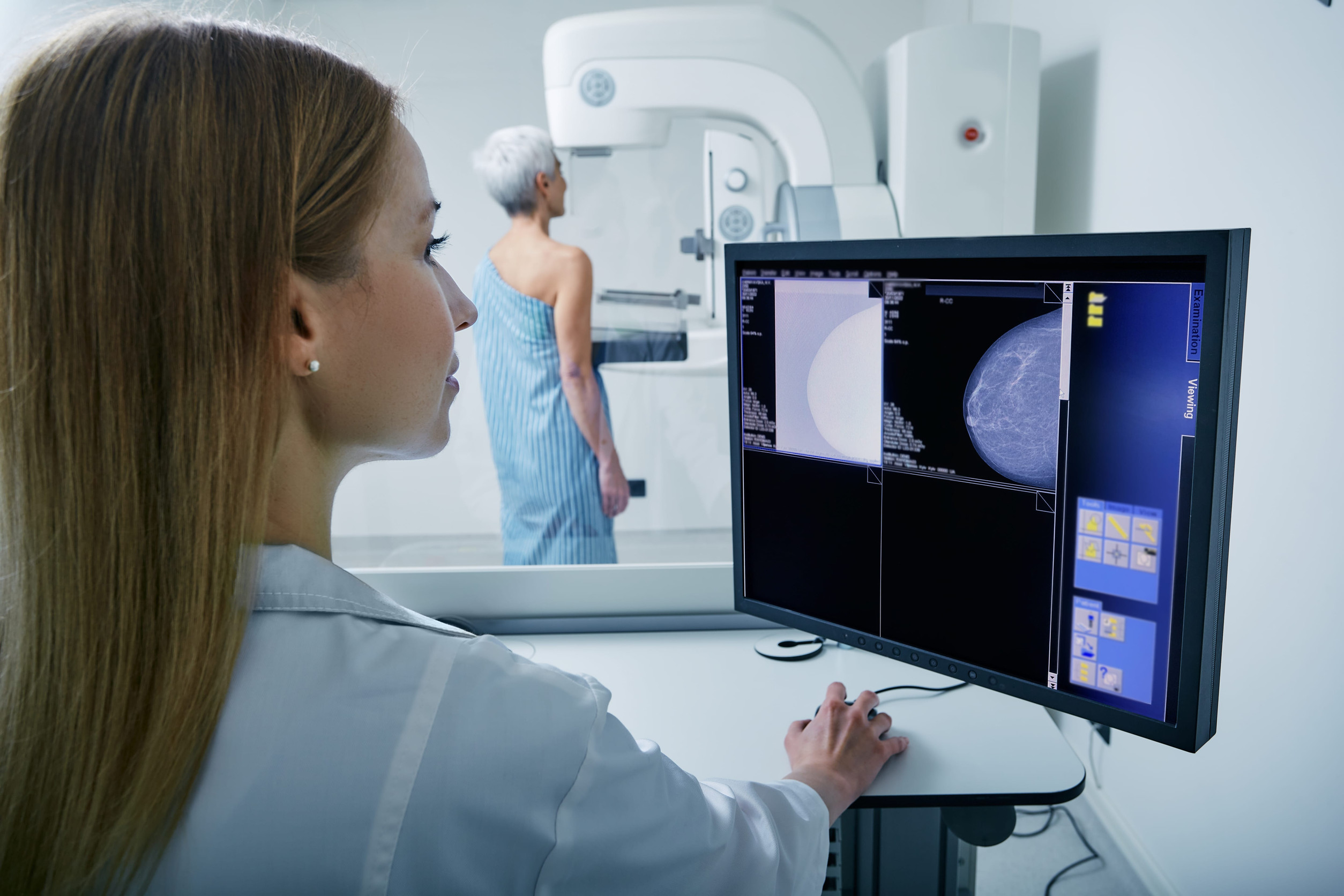
When a woman presents with a breast lump, we generally assess it through what is known as a triple assessment: a clinical examination, breast imaging, and tissue sampling or biopsy when indicated. Ultrasound is commonly used initially in younger women because breast tissue tends to be denser, while in women over 35 with symptoms, mammography together with ultrasound may provide additional information. A core needle biopsy may be performed when examination or imaging is suspicious.
Early detection can provide more treatment options because an early-stage tumour is generally smaller and less likely to have spread, potentially allowing breast-conserving surgery in suitable patients.
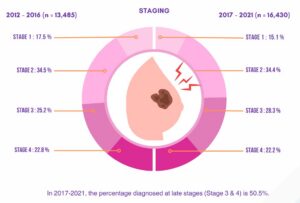
The importance of early diagnosis is reflected in the Malaysia National Cancer Registry Report 2017 to 2021, which also found that 50.5 per cent of staged cases were diagnosed at Stage III or IV, comprising 28.3 per cent at Stage III and 22.2 per cent at Stage IV.
Meanwhile, the Malaysian Study on Cancer Survival 2018 reported a five-year relative survival of 87.5 per cent for Stage I, 80.7 per cent for Stage II, 59.7 per cent for Stage III and 23.3 per cent for Stage IV.
Treatment depends on stage and tumour biology, including hormone receptor and HER2 status and, in some cases, genetic changes. Options include surgery, radiotherapy, chemotherapy, endocrine therapy, HER2-targeted treatments and immunotherapy for selected triple-negative cancers. Treatment may be given before or after surgery.
Risk factors include age, strong family history of breast or ovarian cancer, BRCA1 or BRCA2 mutations, previous breast cancer, certain high-risk conditions, dense breasts and previous chest radiation. Being overweight or obese after menopause, inactivity, alcohol consumption, later first pregnancy and not breastfeeding can also influence risk.
Dr Ong said risk factors do not mean cancer will develop, while some women have no obvious risks other than being female and older.
Women should know what is normal for them and seek medical advice for persistent or unusual changes.